


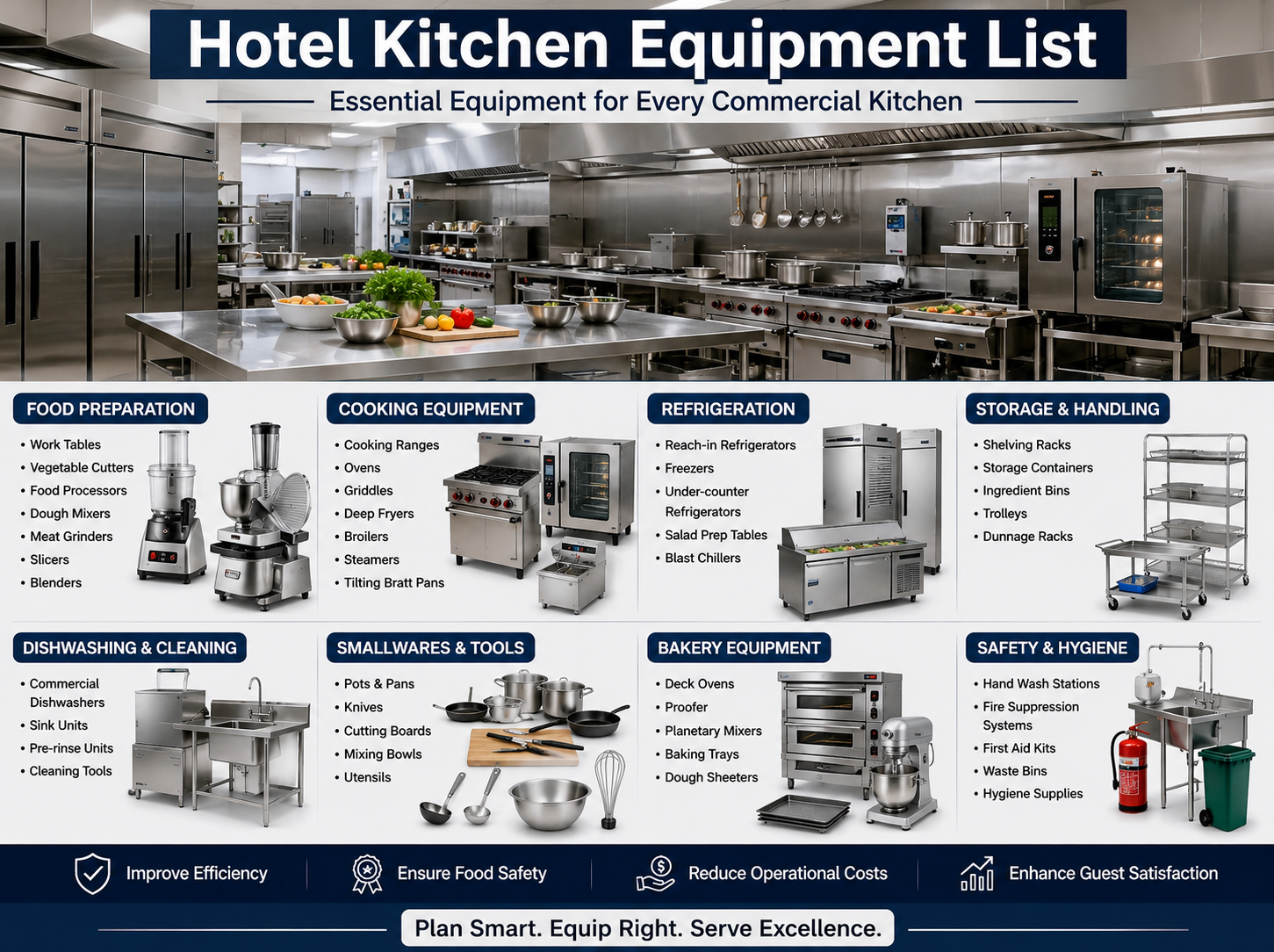
Introduction
A hotel’s kitchen is the heart of its food service operations. Whether it’s preparing breakfast for guests, serving meals in a fine-dining restaurant, catering events, or providing room service, the kitchen must operate efficiently to deliver consistent quality. Behind every successful hotel kitchen is a carefully selected range of equipment designed to support speed, hygiene, and productivity.
Creating a complete hotel kitchen equipment list is one of the first and most important steps when planning a new commercial kitchen or upgrading an existing one. The right equipment not only improves operational efficiency but also helps maintain food safety standards, reduces preparation time, minimizes waste, and ensures chefs have everything they need to prepare meals consistently.
From food preparation stations and commercial cooking appliances to refrigeration units, storage solutions, and cleaning equipment, every piece of equipment has a specific purpose. Investing in high-quality commercial kitchen equipment also reduces maintenance costs, improves energy efficiency, and provides long-term value for hotel owners.
Whether you are opening a boutique hotel, a luxury resort, a business hotel, or a large restaurant within a hospitality property, understanding what equipment you need can save both time and money. This comprehensive guide will walk you through every essential category, helping you make informed purchasing decisions and build a kitchen that meets your operational requirements.
Let’s begin by understanding why proper planning is essential before purchasing any equipment.
Why Planning Your Hotel Kitchen Matters?
Before purchasing equipment, it’s important to design a kitchen that supports your daily operations. Many businesses make the mistake of buying equipment first and planning the layout later, which often leads to wasted space, workflow issues, and unnecessary expenses. Careful planning ensures that your kitchen is functional, efficient, and capable of handling your expected service volume.
The first factor to consider is your menu. A hotel offering buffet meals, à la carte dining, bakery items, or banquet catering will require different equipment than a café or a quick-service restaurant. Understanding your menu helps determine the type and capacity of equipment you’ll need.
Kitchen size is another critical consideration. Every workstation, from food preparation to cooking, storage, and dishwashing, should have adequate space to allow staff to work comfortably without overcrowding. An efficient layout reduces unnecessary movement, speeds up food preparation, and improves overall productivity.
You should also estimate the number of guests you plan to serve daily. Hotels with high occupancy or multiple dining outlets require larger and more durable equipment than smaller establishments. Investing in equipment that matches your expected production volume helps prevent delays during peak hours.
Budget planning is equally important. While it may be tempting to choose lower-cost options, durable and energy-efficient equipment often provides better long-term value by reducing maintenance, repair, and utility expenses.
Before finalizing your hotel kitchen equipment list, consider the following factors:
- Available kitchen space
- Type of cuisine and menu offerings
- Daily customer capacity
- Energy and utility requirements
- Local food safety and hygiene regulations
- Staff workflow and operational efficiency
- Future business growth and expansion plans
- Equipment maintenance and servicing needs
A well-planned commercial kitchen creates a safer working environment, improves service speed, and enhances the overall dining experience for guests.
Food Preparation Equipment
Food preparation is the first stage of every successful kitchen operation. Efficient preparation equipment enables chefs to process ingredients quickly while maintaining consistency and food safety. Selecting the right tools can significantly reduce manual labor, improve productivity, and ensure that meals are prepared to the highest standards.
Stainless Steel Work Tables
Work tables are the foundation of every commercial kitchen. Stainless steel tables provide a durable, hygienic, and corrosion-resistant surface for chopping, mixing, assembling, and plating food. They are easy to clean and meet commercial food safety standards, making them an essential addition to any hotel kitchen.
Commercial Vegetable Cutters
Preparing vegetables by hand can be time-consuming, especially in hotels serving hundreds of meals each day. Commercial vegetable cutters quickly slice, dice, shred, and chop vegetables into uniform sizes, improving presentation and reducing preparation time.
Food Processors
Food processors are versatile machines capable of chopping, grinding, mixing, slicing, shredding, and pureeing ingredients. They help chefs prepare sauces, soups, fillings, dressings, and other recipes with consistent results while saving valuable labor hours.
Commercial Dough Mixers
Hotels with bakeries or restaurants serving fresh bread, pizza, cakes, or pastries rely on commercial dough mixers for consistent mixing. These machines ensure even dough development while handling large batches efficiently, making them indispensable for high-volume baking operations.
Meat Grinders
Freshly ground meat improves the quality of burgers, meatballs, sausages, and other menu items. Commercial meat grinders allow hotels to prepare minced meat in-house, giving chefs greater control over texture, freshness, and ingredient quality.
Commercial Slicers
Commercial slicers are used to cut meats, cheeses, vegetables, and other ingredients into uniform slices. Consistency in slicing not only improves food presentation but also helps control portion sizes and reduce food waste.
Commercial Blenders
Blenders are essential for preparing smoothies, soups, sauces, purees, cocktails, and desserts. High-performance commercial blenders are designed to handle continuous use and can process tough ingredients quickly without compromising performance.
Cutting Boards
Using color-coded cutting boards is an effective way to prevent cross-contamination between raw meat, seafood, poultry, vegetables, and cooked foods. They play a crucial role in maintaining hygiene and complying with food safety regulations.
Chef Knives and Essential Kitchen Tools
Even with advanced machinery, hand tools remain indispensable in every commercial kitchen. Every hotel should equip its kitchen with high-quality chef knives, paring knives, boning knives, peelers, measuring cups, tongs, spatulas, whisks, ladles, and mixing bowls. Investing in durable tools not only improves precision but also enhances the efficiency and safety of kitchen staff.
Why Quality Preparation Equipment Matters?
Preparation is the foundation of every meal served in a hotel. Reliable equipment allows chefs to work faster, maintain consistency, and reduce physical effort, especially during busy service periods. High-quality preparation tools also minimize ingredient waste, improve portion control, and contribute to better food quality.
When building your hotel kitchen equipment list, prioritizing durable food preparation equipment ensures smoother operations and creates a strong foundation for the rest of your commercial kitchen equipment investment.
Commercial Cooking Equipment
Once ingredients are prepared, the next stage is cooking. This is where the core of your kitchen operations takes place. Choosing the right commercial cooking equipment is essential for maintaining food quality, improving kitchen efficiency, and meeting customer expectations during busy service hours. Hotels often prepare dozens or even hundreds of meals simultaneously, making durable and high-capacity equipment a necessity.
When selecting cooking equipment, consider your menu, daily production volume, available kitchen space, and energy source. Investing in reliable equipment not only improves productivity but also reduces downtime and maintenance costs.
Commercial Gas Ranges
A commercial gas range is one of the most important appliances in any hotel kitchen. Available in four, six, or eight-burner configurations, these ranges allow chefs to cook multiple dishes at the same time. Gas ranges provide precise temperature control, making them ideal for sautéing, boiling, frying, and simmering various recipes.
Commercial Ovens
Hotels use different types of ovens depending on their menu and food production needs.
- Convection Ovens use fans to circulate hot air, ensuring even cooking and faster baking.
- Combi Ovens combine steam and convection cooking, making them suitable for roasting, baking, steaming, and reheating food while retaining moisture.
- Deck Ovens are commonly used for artisan bread, pizzas, and baked goods that require consistent bottom heat.
Choosing the right oven improves cooking consistency and helps chefs prepare a wide variety of dishes efficiently.
Deep Fryers
Commercial deep fryers are designed to handle continuous frying during peak hours. They are perfect for preparing French fries, fried chicken, seafood, snacks, and appetizers. Modern fryers include temperature controls and filtration systems that help extend oil life and improve food quality.
Griddles
Flat-top griddles provide a large cooking surface for preparing breakfast items, burgers, sandwiches, pancakes, eggs, and grilled vegetables. Their even heat distribution allows chefs to cook multiple items simultaneously, increasing productivity during busy breakfast and lunch services.
Charbroilers
Charbroilers create the authentic grilled flavor that many guests expect from steaks, burgers, kebabs, seafood, and vegetables. They use open flames or radiant heat to produce attractive grill marks while enhancing the taste and appearance of food.
Steamers
Commercial steamers are ideal for preparing vegetables, rice, seafood, dumplings, and healthy menu items. Since steaming preserves nutrients, color, and texture better than many other cooking methods, it is widely used in hotels that emphasize nutritious dining options.
Rice Cookers
Hotels serving Asian cuisine or buffet meals often prepare large quantities of rice throughout the day. Commercial rice cookers automate the cooking process, ensuring perfectly cooked rice with minimal supervision while keeping it warm until serving.
Tilting Braising Pans
A tilting braising pan is a versatile piece of equipment capable of sautéing, braising, simmering, boiling, and shallow frying. Its large capacity makes it ideal for banquet kitchens and hotels that prepare soups, curries, sauces, and stews in bulk.
Cooking Kettles
Commercial cooking kettles are commonly used for preparing soups, sauces, gravies, stocks, pasta, and large-volume liquid dishes. They offer consistent heating and are especially useful in hotels with banquet or catering services.
Salamander Grills
A salamander grill provides intense overhead heat, making it perfect for melting cheese, browning casseroles, toasting bread, and finishing dishes before serving. It helps chefs achieve professional presentation without overcooking the food.
Why Quality Commercial Cooking Equipment Matters?
Reliable commercial cooking equipment improves kitchen efficiency, reduces cooking time, and ensures consistent food quality. Durable appliances are designed to withstand continuous operation in demanding hotel environments, making them a worthwhile long-term investment. By selecting the right equipment, hotel owners can improve productivity, reduce energy consumption, and deliver a better dining experience for guests.
Refrigeration Equipment
Proper refrigeration is essential for preserving food quality and maintaining food safety standards. Hotels store a wide variety of ingredients, including fresh produce, dairy products, meat, seafood, beverages, and frozen items. Using the right refrigeration equipment helps prevent spoilage, extends shelf life, and ensures compliance with food safety regulations.
Reach-In Refrigerators
Reach-in refrigerators are among the most commonly used refrigeration units in commercial kitchens. They provide easy access to frequently used ingredients and are available in single, double, and triple-door models to suit different storage capacities.
Reach-In Freezers
Commercial freezers are used to store frozen foods such as meat, seafood, desserts, and prepared ingredients. Maintaining consistent freezing temperatures helps preserve food quality while reducing waste.
Walk-In Cold Rooms
Hotels with high food production require walk-in refrigerators and freezers to store large quantities of inventory. Walk-in cold rooms provide organized storage, making it easier to manage stock and maintain freshness.
Blast Chillers
Blast chillers rapidly cool freshly cooked food, reducing the time it spends in the temperature danger zone where bacteria can grow. They are particularly valuable in hotels that prepare meals in advance for buffets, banquets, and catering events.
Ice Machines
Commercial ice machines produce large quantities of ice for restaurants, bars, room service, and banquet events. A reliable ice supply is essential for beverages, food displays, and cold storage applications.
Beverage Coolers and Display Chillers
Hotels often use beverage coolers to store bottled drinks, juices, and soft drinks at serving temperature. Display chillers not only keep products fresh but also showcase desserts, cakes, salads, and beverages in an attractive manner for guests.
Benefits of Proper Refrigeration
Investing in quality refrigeration equipment offers several advantages:
- Maintains food freshness and quality
- Reduces food spoilage and waste
- Supports food safety compliance
- Improves inventory management
- Ensures ingredients are always ready for preparation
Reliable refrigeration is an essential component of any commercial kitchen equipment setup, helping hotels operate efficiently while protecting both food quality and customer health.
Storage Equipment
Proper storage keeps a commercial kitchen organized, safe, and efficient. Well-designed storage systems make it easier for staff to locate ingredients, manage inventory, and maintain cleanliness. They also help maximize available space while protecting food and kitchen supplies from contamination.
Stainless Steel Shelving
Stainless steel shelving is widely used in hotel kitchens because it is durable, rust-resistant, and easy to clean. Shelving keeps ingredients, utensils, and equipment off the floor, improving hygiene and making cleaning easier.
Dry Storage Racks
Dry storage racks are designed for storing packaged foods, canned goods, grains, flour, sugar, and spices. Proper airflow around stored products helps maintain quality and reduces the risk of moisture damage.
Ingredient Storage Bins
Food-grade storage bins provide secure storage for bulk ingredients such as rice, flour, cereals, and pulses. Many bins come with lids and wheels, making them both hygienic and easy to move within the kitchen.
Airtight Food Containers
Airtight containers help preserve freshness by protecting ingredients from moisture, pests, and contamination. Clear labeling and date marking also support efficient inventory rotation using the first-in, first-out (FIFO) method.
Mobile Storage Trolleys
Mobile trolleys simplify the transportation of ingredients, utensils, prepared dishes, and cleaning supplies throughout the kitchen. They reduce manual lifting and improve workflow during busy service periods.
Why Efficient Storage Is Important
An organized storage system reduces clutter, improves staff productivity, and minimizes food waste. Proper storage also supports food safety by keeping ingredients protected and ensuring easy stock rotation. Including reliable storage solutions in your hotel kitchen equipment list helps create a kitchen that operates smoothly, even during peak service hours.
Cleaning Equipment
Maintaining cleanliness in a hotel kitchen is just as important as having the right cooking equipment. A clean kitchen protects guests from foodborne illnesses, helps businesses comply with food safety regulations, and extends the lifespan of expensive equipment. Since hotel kitchens operate continuously, having dedicated cleaning equipment ensures that hygiene standards are maintained throughout the day.
Commercial Dishwashers
Commercial dishwashers are designed to clean large volumes of plates, glasses, cookware, and utensils quickly and efficiently. Unlike residential dishwashers, they operate at higher temperatures, ensuring proper sanitization while reducing turnaround time during busy meal services. Investing in a high-capacity dishwasher improves productivity and reduces manual labor.
Three-Compartment Sink
A three-compartment sink remains an essential requirement in many commercial kitchens. Each compartment serves a specific purpose:
- Washing
- Rinsing
- Sanitizing
This process ensures that cookware and utensils are thoroughly cleaned before being reused, helping hotels maintain strict hygiene standards.
Hand Wash Stations
Proper hand hygiene is one of the most effective ways to prevent contamination. Hand wash stations should be installed at convenient locations throughout the kitchen so staff can wash their hands before handling food, after using cleaning chemicals, or after handling raw ingredients.
Grease Traps
Grease traps prevent fats, oils, and grease from entering the drainage system. Without them, plumbing systems can become clogged, leading to expensive repairs and operational disruptions. Regular maintenance of grease traps also helps hotels comply with environmental regulations.
Waste Management Systems
Proper waste management is essential for maintaining a clean and organized kitchen. Hotels should use separate bins for:
- Food waste
- Recyclable materials
- General waste
Clearly labeled bins encourage proper waste segregation and make disposal more efficient.
Cleaning Tools and Chemicals
Every commercial kitchen should be equipped with professional cleaning supplies, including:
- Floor mops
- Buckets
- Scrubbing brushes
- Microfiber cloths
- Food-safe sanitizers
- Degreasers
- Glass cleaners
- Floor cleaning machines (for larger kitchens)
Using commercial-grade cleaning products ensures effective sanitation without damaging kitchen equipment.
Why Cleaning Equipment Matters
Regular cleaning protects both customers and employees while improving the lifespan of your commercial kitchen equipment. A hygienic kitchen also creates a better working environment, reduces health risks, and helps maintain compliance with local food safety regulations.
Recommended Hotel Kitchen Layout
Even the best equipment cannot perform efficiently if the kitchen layout is poorly designed. A well-organized kitchen minimizes unnecessary movement, improves communication between staff, and creates a smooth workflow from receiving ingredients to serving finished meals.
A standard hotel kitchen typically follows this sequence:
Receiving → Storage → Preparation → Cooking → Plating → Serving → Dishwashing → Waste Disposal
Each section should be clearly defined to avoid congestion and reduce the risk of cross-contamination.
Receiving Area
This is where food deliveries are inspected before being accepted. Staff should check product quality, expiry dates, and temperatures before transferring items to storage.
Storage Area
Ingredients should immediately be moved to dry storage, refrigerators, or freezers depending on their requirements. Organizing inventory using the FIFO (First In, First Out) method helps reduce waste and ensures older stock is used first.
Preparation Area
The preparation section should include work tables, cutting stations, sinks, and food preparation equipment. Keeping this area separate from cooking stations helps maintain hygiene and improves efficiency.
Cooking Area
The cooking zone contains all major commercial cooking equipment, including ovens, ranges, fryers, steamers, and grills. Equipment should be arranged according to the menu and workflow to reduce unnecessary movement.
Plating and Service Area
Finished dishes should be plated in a dedicated space before being sent to the dining area or room service. Heat lamps and food warmers can help maintain serving temperatures.
Dishwashing Area
Dirty dishes should move directly to the dishwashing section without crossing paths with clean food preparation areas. This separation significantly reduces contamination risks.
A thoughtfully designed kitchen layout improves staff productivity, reduces accidents, and maximizes the efficiency of every piece of equipment.
How to Choose the Right Hotel Equipment Supplier
Choosing the right hotel equipment supplier is just as important as selecting the equipment itself. A trusted supplier provides expert advice, quality products, installation support, and after-sales service that can save your business time and money.
When evaluating suppliers, consider the following factors:
- Product quality and certifications
- Industry experience
- Range of available products
- Equipment warranties
- Installation services
- Preventive maintenance programs
- Availability of spare parts
- Technical support and customer service
- Client reviews and testimonials
An experienced supplier can also assist with kitchen planning, helping you choose equipment that matches your available space, menu, and production capacity. This guidance helps avoid unnecessary purchases and ensures your kitchen is designed for long-term success.
Although price is important, it should not be the only deciding factor. Investing in durable equipment backed by reliable service usually results in lower operating costs over the equipment’s lifespan.
Where to Buy Hotel Kitchen Equipment Near Me
If you’re searching online for hotel kitchen equipment near me, take time to compare suppliers before making a purchase. Local suppliers often provide valuable services beyond simply selling equipment.
Look for suppliers that offer:
- Complete commercial kitchen solutions
- Product demonstrations or showroom visits
- Professional installation
- Maintenance and repair services
- Genuine spare parts
- Warranty support
- Competitive pricing
- Fast delivery and responsive customer service
Reading customer reviews, requesting quotations, and consulting with experienced sales professionals can help you make informed decisions. A supplier who understands the hospitality industry can recommend equipment tailored to your hotel’s size, menu, and operational requirements.
Conclusion
Building an efficient hotel kitchen starts with choosing the right equipment. From food preparation and commercial cooking equipment to refrigeration, storage, and cleaning systems, every item plays an important role in ensuring smooth operations, food safety, and consistent service quality.
A carefully planned hotel kitchen equipment list helps hotel owners invest wisely, improve staff productivity, reduce food waste, and create an organized workspace capable of handling daily operations efficiently. By selecting durable commercial kitchen equipment and partnering with a trusted hotel equipment supplier, you can build a kitchen that delivers reliable performance for years to come.
Whether you’re setting up a new hotel kitchen or upgrading an existing facility, investing in high-quality equipment is a decision that supports long-term business growth and enhances the dining experience for every guest.
Download Your Hotel Kitchen Equipment Checklist
Planning your commercial kitchen doesn’t have to be complicated. Download our complete Hotel Kitchen Equipment Checklist to ensure you don’t miss any essential equipment before making your purchase.
Need expert guidance? Contact our sales team today for personalized recommendations, professional kitchen planning, and premium commercial kitchen solutions tailored to your hotel’s needs.
Frequently Asked Questions (FAQs)
1. What equipment is required for a hotel kitchen?
A complete hotel kitchen typically requires food preparation equipment, commercial cooking equipment, refrigeration units, storage solutions, dishwashing systems, cleaning equipment, serving stations, and essential kitchen utensils. The exact equipment depends on the hotel’s menu, kitchen size, and daily production capacity.
2. What is the most important commercial kitchen equipment?
There is no single most important piece of equipment, as every kitchen has different requirements. However, gas ranges, commercial ovens, refrigerators, preparation tables, dishwashers, and storage systems are considered the foundation of most commercial kitchens.
3. How do I choose the best hotel equipment supplier?
Choose a supplier with industry experience, high-quality certified products, installation services, warranty support, readily available spare parts, and reliable after-sales service. Customer reviews and project experience are also good indicators of a trustworthy supplier.
4. How often should commercial kitchen equipment be maintained?
Routine cleaning should be performed daily, while preventive maintenance should follow the manufacturer’s recommendations. Regular servicing helps reduce unexpected breakdowns, improves energy efficiency, and extends the lifespan of your equipment.
5. Where can I buy hotel kitchen equipment near me?
You can purchase equipment from specialized commercial kitchen equipment dealers, hospitality equipment suppliers, or authorized distributors in your area. Compare product quality, warranties, service support, and pricing before making a final decision.